
Thailand Visa from Dubai: The Ultimate 2026 Guide for UAE Residents
Table of Contents
Planning a trip and looking to apply for a Thailand visa from Dubai for UAE residents this year?
Then don’t think you will wing it as you are at check-in. Thailand has spent the past half of this year steadily undoing the liberal 60-day visa waiver which had been welcomed by locals since last summer. The Royal Thai Embassy in Abu Dhabi and the Royal Thai Consulate General in Dubai process all visa applications on-line only. There are no longer walk-up counters available and, with the added complication of a mandatory e-arrival form and a shorter list of countries which can still gain on arrival, this is sure to come as a nasty surprise to many UAE residents this summer.
Here you’ll find a run-through of who really needs a Thailand visa from Dubai, who still has visa-free entry, and why your passport – not your Dubai visa sticker – will determine the rules. Dive in for docs you’ll need, the arrival form, what it’s actually like for your cash and time, and the common blunders that cause issues at the border.
Do UAE Residents Need a Thailand Visa in 2026?
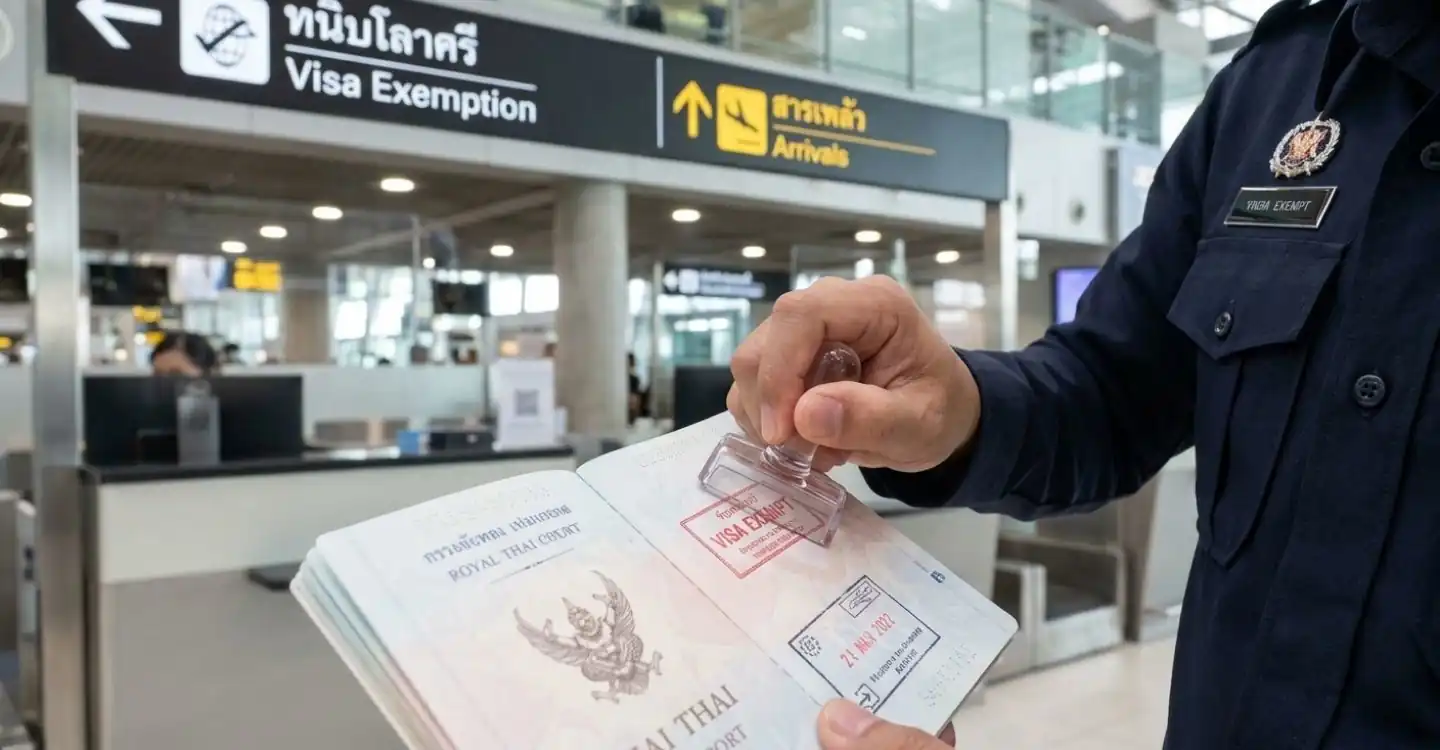
There’s no clear-cut answer to “Is Thailand visa-free for UAE residents?” The reason is because in the eyes of Thai immigration, it doesn’t matter where you live; the passport that you have is what matters. If you hold a British passport while living in the UAE, whether flying from Dubai or London or New York, the treatment at passport control will be the same. An Indian, Pakistani or Egyptian holding a passport and living in the UAE will be treated the same as if you were flying out of Mumbai, Lahore, or Cairo.
Visa Exemption vs. Visa on Arrival (VoA) for Expats
Thailand offers 3 entry streams: a visa exemption (it’s a free stamp, not something you have to apply for), a visa on arrival (which is day-entry only and which you can purchase at the counter in baht as you land) or an advance visa, which you organise on the e-Visa. In July 2024 many dozens of nationalities have just been given an extra generous 60-day visa exemption. That’s now being walked back. The Thai Cabinet approved a return to a tiered system on 19 May 2026: most of the 54 nationalities that had the 60-day window drop to 30 days, a few drop to 15, and a handful – India among them – get moved off the exemption list altogether and onto visa-on-arrival at 15 days. None of this kicks in until 15 days after it’s published in the Royal Gazette, and as of mid-June 2026 that publication still hadn’t happened, so 60-day stamps were technically still going out at the border. It’s the kind of detail that can change between you reading this and you actually boarding, so check your status closer to your travel date rather than going off what worked last time.
Can I Enter Thailand Visa-Free with an Emirates ID Only?
No, and this is probably the misconception we hear most often. An Emirates ID is a UAE identity card, not a travel document, and Thai immigration won’t look at it twice. You enter on your passport, full stop, and your passport’s nationality is what determines whether you’re visa-free, on the VoA list, or need to apply ahead of time. UAE nationals do get visa-free entry — but that’s the privilege of the roughly one in ten Dubai residents who actually hold an Emirati passport, not the much larger expat population who just happen to live and work here.
Who Can Apply for a Thailand Visa from Dubai (And Who Cannot)?
Not everyone sitting in Dubai can actually submit a Thailand visa application through the UAE. Embassies process these based on jurisdiction, meaning your legal status in the country, not your physical location, so before getting into nationality-specific rules, it’s worth checking whether you even qualify to apply from here in the first place.
Eligible Applicants: UAE Residence Visa Holders & Investors
If you need to apply in advance, the UAE channel is generally open to anyone with a valid UAE residence visa — employment, family/dependent, investor or partner, student, or Golden Visa. Embassies make these calls based on jurisdiction: you’ll need a few weeks of residency validity left beyond your travel dates, plus a passport with at least six months left on it from your date of entry into Thailand.
Important Exclusion: Can UAE Tourist or Visit Visa Holders Apply from Dubai?
This is where a surprising number of applications go sideways. If you’re in the UAE on a tourist or visit visa rather than a residence visa, you’re not under UAE jurisdiction as far as the Thai embassy is concerned, even if you’re sitting in Dubai right now. In practice, you’d usually need to apply through the embassy in your actual country of residence or citizenship instead. Worth checking before you submit — a rejection on jurisdiction grounds wastes your time and a fee you won’t get back.
Thailand Visa Requirements by Passport Nationality in the UAE
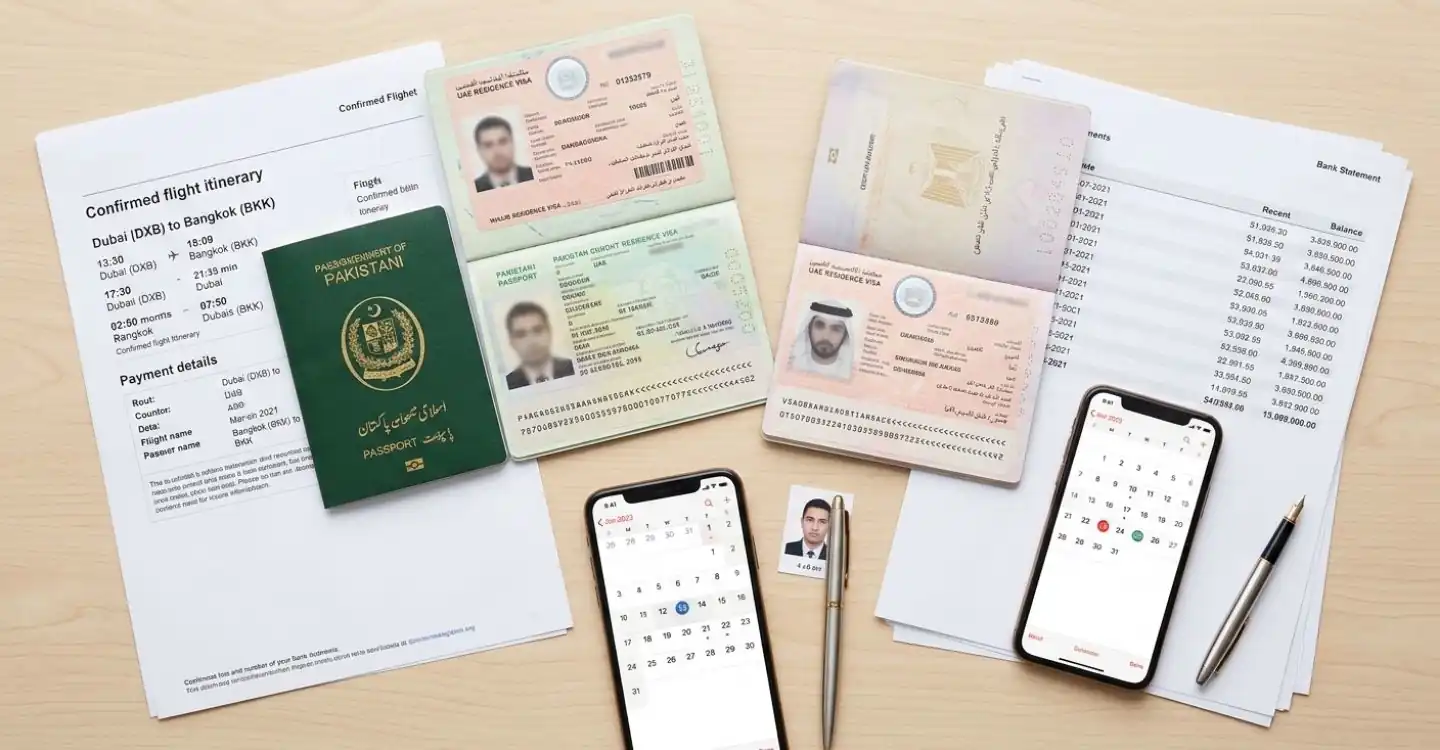
Thailand welcomes people of almost every nationality, yet for expats in Thailand, the expats have their specific nationalities. The Indian, Pakistani, and UK expats in Dubai may come from the same street. It makes no sense when the two expats have booking the same flight the exact same hotel, and then they apply in two completely opposite directions. Always search the country’s policy for your nationality before proceeding to their country.
Thailand Visa for Indian Passport Holders: 2026 Exemption & eVOA Status
Nobody has had a more volatile 2026 than Indians, not more so far than anyone at any other point in history, actually. In February, Indian passport holders got onto the 60-day exemption list for the first time — a genuine win. By 19 May, the Cabinet had reversed it, dropping India into a small visa-on-arrival group alongside Azerbaijan, Belarus, and Serbia, capped at 15 days and a THB 2,000 cash fee at the counter. But, as ever with all the Thai government’s rollback actions, it isn’t active until 15 days after it is published in the Royal Gazette.
If your trip will take longer than 15 days or if you want to avoid any uncertainty regarding shifting policy dates, it is highly recommended to secure a 60-day Thailand Tourist Visa (TR) via the official e-Visa portal in advance. Since entry frameworks and Royal Gazette announcements can change rapidly, verifying the live status with Odit Travel before finalizing your itinerary is the safest approach.
Thailand Visa for Pakistani, Egyptian, and Syrian Passport Holders
Pakistani passport holders, Egyptian passport holders, or Syrian passport holders are not included in the exemption list nor on the VoA list, so the Thailand visa for Pakistani UAE residents, Egyptian UAE residents, or Syrian UAE residents needs to be done in advance using the e-Visa system. There’s no airport workaround here — turning up without an approved visa generally means you don’t board, or you get turned back on landing. Of all the nationalities covered in this guide, these three have the least margin for last-minute planning.
Thailand Visa for Western Expats (US, UK, and European Citizens in Dubai)
US, UK, Canadian, Australian, and most EU passport holders in Dubai currently sit in the 60-day exemption tier, dropping to 30 once the new rules land, with one 30-day extension available once you’re inside Thailand. For a short holiday, this is still the easiest route in — no advance visa, just the mandatory digital arrival card covered below. If you’re planning something longer, or several trips a year, the Destination Thailand Visa is worth a look instead of relying on repeated visa-free entries.
Types of Thailand Visas Available from Dubai
Having ascertained that you need an advance visa and it’s not visa-free or VOA, it boils down to selecting which particular visa category best applies to your journey. The UAE has several categories available and getting it wrong the very first time is where the majority of delays in application or even rejection happen.
Thailand Single-Entry Tourist Visa (TR)
A Single-Entry Tourist Visa (TR) lets you visit once. It usually lasts for 60 days. You can ask to stay 30 days more, but you need to go to a Thai immigration office to get this.
This visa is good if your country does not give you a free pass, and you do not plan to visit Thailand again soon.
Thailand Multiple-Entry Tourist Visa (METV)
A 6-month validity Multiple-Entry Tourist visa allows multiple visits of 60 days’ duration within the visa validity period, which might work for those who travel to Thailand every couple of months, not just once a year
The New Destination Thailand Visa (DTV) for Digital Nomads & Remote Workers
The newer option – the Destination Thailand Visa (DTV). This is also a five-year, multi-entry visa but allows each entry for a maximum of 180 days, which can be extended a further 180 days. The DTV comes in three flavours. Workcation – for remote working for customers outside of Thailand. Thai Soft Power – (Muay Thai schools, Thai cooking courses, Thai medical tourism, etc).
And dependent – (spouse or children below 20 travelling with the primary visa holder). The requirement to show a 500,000 THB fund and a 10,000 THB application fee remain. It won’t let you work for a Thai employer or earn locally.
Thailand Business Visa (Non-Immigrant B)
A business visa (non-immigrant B) is for actual business in Thailand — working inside a registered Thai company, chasing a work permit, and that sort of thing. It needs more paperwork from the Thai entity inviting you and isn’t something to use as a stand-in for a tourist visa.
Complete Thailand Visa Requirements: Complete Document Checklist
No matter what visa suits your trip, the success hinges upon the documents to back up your application. What you can generally expect if you’re an applicant from the UAE is:
Core Personal Documents (Passport, Valid UAE Visa & Emirates ID)
Your original passport with at least six months’ validity and a few blank pages, a copy of your valid UAE residence visa, and your Emirates ID, front and back.
Financial Proof: Bank Statement Rules & “The 3000 Dirham Rule”
Thai authorities generally want to see funds equivalent to at least THB 10,000 per person, or THB 20,000 per family. In Dubai’s visa-consultancy world, this gets referred to informally as the “3,000 dirham rule” – a personal bank statement covering three to six months showing a steady, healthy balance, not one large deposit dropped in days before you apply. Officers know how to spot a last-minute transfer, and a thin account with one suspicious top-up is one of the quickest routes to a rejection.
Additional Documents by Employment Status (Salary Certificates & Company NOC Letters)
Salaried applicants need a recent salary certificate and a few months of payslips; business owners need a trade licence and, where required, an NOC letter from their employer confirming approved leave; investors and Golden Visa holders should bring proof of the underlying investment.
Thailand Visa Photo Requirements & Verifiable Flight/Hotel Itineraries
Thailand’s visa rules are strict. Your photo must be recent, have a plain white background, and be about 4×6 cm. Keep a neutral face, no glasses or hats, unless it’s for religious reasons.
You also need a confirmed round-trip flight and a hotel booking that can be checked. Don’t send a screenshot of a search result. Embassies have turned down files with unconfirmed bookings or placeholder dates.
Be sure your flight and hotel are real and can be verified to avoid delays or rejection.
The Mandatory TDAC (Thailand Digital Arrival Card) System
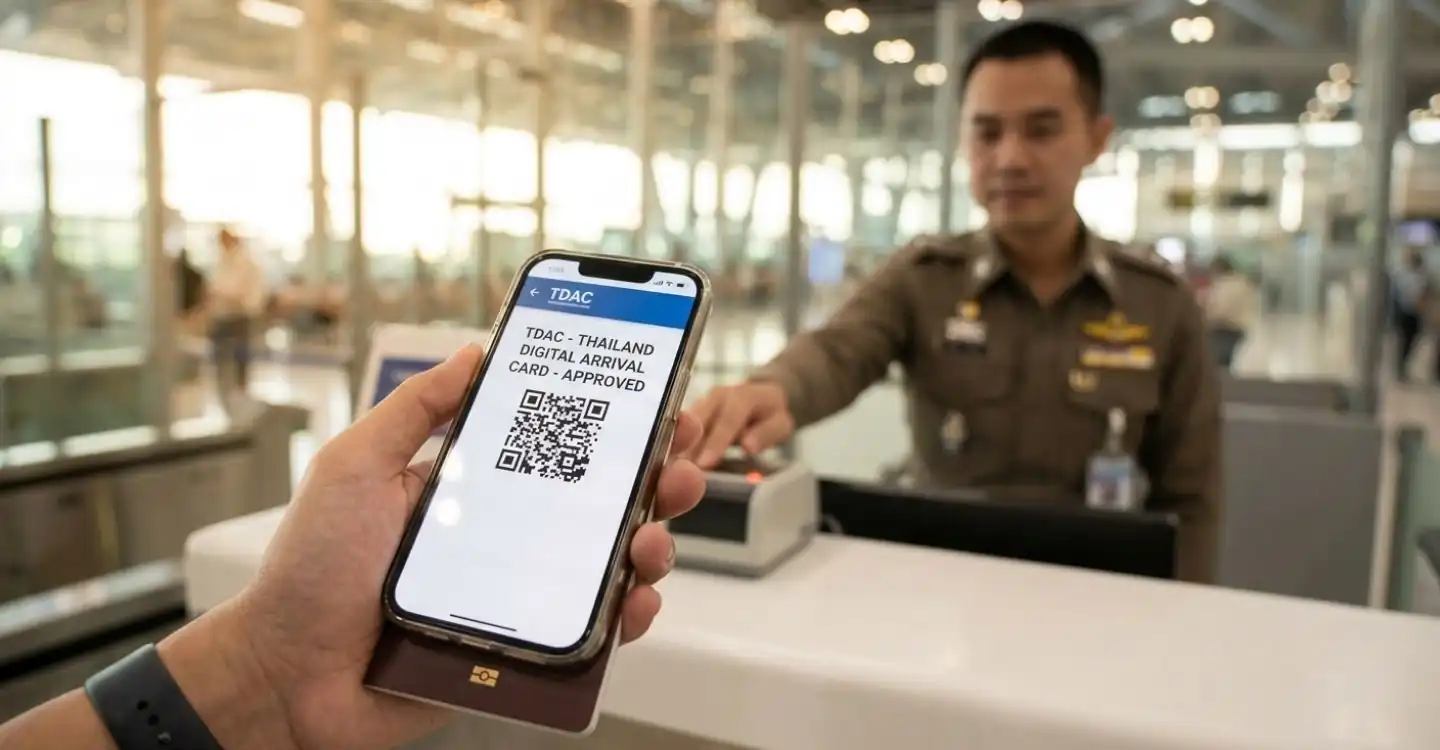
Whatever entry route applies to you, every traveller now has to complete the Thailand Digital Arrival Card before landing — exempt or on arrival or a full visa holder, it doesn’t matter. It’s free, done online within 72 hours of your flight, and gives you a QR code that gets checked along with your passport at the airport. This should not be seen as an optional extra even if you already have a Thailand visa arranged prior to your travel.
Step-by-Step: How to Apply Online via the Thailand e-Visa Portal
- Create an account on the official e-Visa portal and select the appropriate visa category.
- Set your passport country correctly, and confirm UAE jurisdiction where it applies to you.
- Upload your passport bio page, photo, UAE residence visa, Emirates ID, financial proof, and flight/hotel documents in the formats they specify.
- Go through every field carefully — most portals won’t let you edit after you’ve paid.
- Pay the fee online by card.
- After it has been approved, you may download your e-Visa as a PDF file to print it and carry during your travel.
Why the Royal Thai Embassy Dubai Switched to 100% Digital Applications
After December 31, 2024, both the Royal Thai Embassy and consulate will cease all in-person visa application submissions, for real this time. And everybody – yes, everybody – has to now apply on the e-Visa system for Thailand.
It’s part of a broader digital push across Thai consular services aimed at standardising how files get checked and cutting down queues. The catch is there’s no staff member left to flag a missing document on the spot, which is exactly the gap a decent visa consultant fills.
How Odit Travel Secures and Manages Your Online Submission
That’s really where we come in. We go through every document against the current embassy checklist before anything’s uploaded, flag bank statements that look likely to raise questions, get photos and itineraries formatted to spec, and keep an eye on your application so you’re not the one refreshing a government portal at 7am. When there’s no one to ask questions to on the other end, having someone check the file before it’s locked matters more than it used to.
Getting a Quote: Thailand Visa Fee from Dubai & Processing Times
The actual amount that you’ll pay for a Thailand visa from Dubai varies depending on a number of moving factors, as well as your nationality, the visa you require, and how soon you’ll need a response – so rather than risk putting one figure and seeing it quickly change, we prepare an accurate, personalised quotation once we have received your travel dates and visa requirements.
Official Consular Fees vs. Fast-Track Processing Fees
There are really two separate costs at play here, and it’s worth not mixing them up. The first is the government consular fee, set by the Thai embassy itself: a single-entry tourist e-Visa generally runs to a few hundred dirhams, while the Destination Thailand Visa is priced higher given it covers five years and multiple entries. The second is any service fee charged by a visa consultancy for reviewing, formatting, and submitting your file on your behalf, which sits on top of, not instead of, the government fee. On timing, standard government processing usually takes around one to two weeks depending on embassy workload and how complete your file is on first submission, while a fast-track or express service through an agency mainly speeds up the document preparation and review stage rather than the embassy’s own decision clock, which the embassy controls regardless of who submitted the file. Either way, build in extra lead time around Eid, Christmas, and Songkran in mid-April, when both consular workload and demand for fast-track slots tend to spike.
Why Choosing an Expert Dubai Visa Consultant Saves Your Budget
The math here is simpler than it looks. Consular fees don’t come back whether your application is approved or rejected, so a rejection doesn’t just cost you the fee; it costs you the days you’ll lose reapplying, and if your flight is close, it can cost you the trip outright. A consultant who’s currently working through these files every week knows what’s getting flagged right now, not what was flagged six months ago, and catches the kind of small errors, a mismatched name, a thin bank statement, or an unconfirmed hotel booking before they ever reach the embassy. Paying a service fee upfront to avoid a rejected, non-refundable application is almost always the cheaper outcome once you weigh in the lost time and the risk of missing your travel dates altogether.
Common Mistakes That Lead to Thailand Visa Rejections in Dubai
We see the same handful of errors over and over: applying under the wrong jurisdiction (visit visa holders applying as if they’re UAE residents), a bank statement with a suspiciously large recent deposit, a hotel booking that turns out to be unconfirmed, names that don’t match between the passport and supporting documents, a passport with under six months’ validity, or simply the wrong visa category for what the trip’s actually for. All of these were easily preventable, though, if I’d given even a cursory review before submitting.
Post-Arrival Rules: Can You Extend a Thailand Tourist Visa in Bangkok or Phuket?
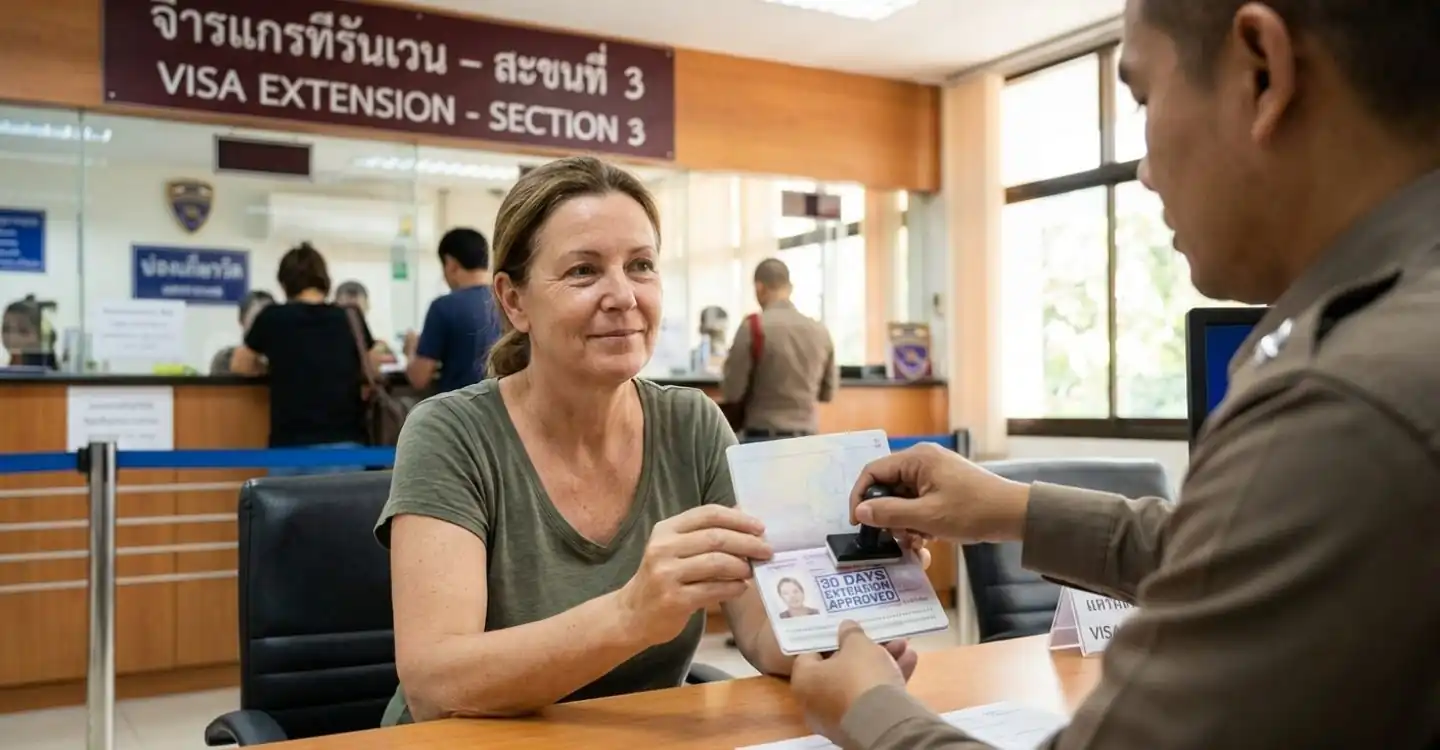
When plans change while you are there and many people decide somewhere around the middle of your vacation, it seems as though it’s going to need a couple weeks! Thailand allows for this, within limits, and you don’t need to leave the country or start a fresh visa application to make it happen.
Step-by-Step Guide to Staying Longer in Thailand
The vast majority of Thai single-entry tourist visas, or single-entry non-immigrant visas, or even visa-exempt stamps can be extended by another 30 days, only once. This applies to any Thai immigration office around the country – both the Phuket-based one and the one down in Bangkok commonly handle applications for this very regularly. Here’s how it actually happens.
- Go before your current stay expires. This is the one rule that really matters — applying even a day late turns a routine extension into an overstay problem, which is a much less pleasant conversation with immigration than the one you were hoping to have.
- Don’t forget your passport, a stamped extension card and a passport-sized photograph; extension card forms can also be found at the office, or you may download and print a form beforehand.
- Pay the THB 1,900 at the counter as requested.
- Wait for the new stamp. Arrive reasonably early in the day with your documents in order, and most offices will get it into your passport before you leave.
One thing worth flagging: you only get this extension once per entry. Once that extra month runs out, you’re either booking a flight out or you’ve already got a different visa category sorted.
Exploring Long-Term Options: Becoming a Thai Resident or Citizen
For people who realise a single extension still isn’t enough, there are real paths to staying longer, though none of them are something you sort out on the spot at an immigration desk. Remote workers tend to land on the Destination Thailand Visa, which gets you up to 180 days per entry with one further 180-day extension available, all inside a five-year multiple-entry visa. If you’re 50 or over and thinking about retirement, the non-immigrant O-A or O-X is the more relevant route, and it asks for either THB 800,000 sitting in a Thai bank account or around THB 65,000 a month in income you can actually verify, plus health insurance.
Beyond those two, you’re looking at permanent residency or full Thai citizenship, and that’s a different scale of commitment entirely — years of qualifying residence, language requirements, background checks, and separate applications that take a long time to clear. None of that is something to figure out in the midst of a tourist stamp. If Thailand really is your long term goal, not just your next vacation spot, which ought to have a plan of its own and its own timeline developed before your ticket leaves your wallet.
Important Disclaimer & Legal Protections
Before you go further, it’s worth being upfront about a few things, both around money and around the documents you’ll be handing over to apply.
Transparency: Official Agency Fees & Refund Policies
Thai government consular fees are set by the embassy and consulate, and they don’t come back regardless of the outcome, whether your application is approved or rejected. That’s standard practice across embassies generally, not something specific to Odit Travel or any other agency, so be wary of anyone implying otherwise. Any service fee we or another consultancy charges for reviewing, formatting, and submitting your file is a separate cost on top of the government fee, and we’ll always spell out what that covers before you commit to anything, rather than bundling it in as one vague total.
Also useful is understanding that rules, charges and processing times often change with very little public advance notice, as has been evident already several times during 2026. This is based on what’s effective right now (mid-June 2026), and would rather direct you to verify the latest status for your particular nationality before booking flights than have you be working from out-of-date information that hasn’t even been publicised that there’s a change.
Data Privacy: How We Secure Your Personal Records in Dubai
A Thailand visa application means handing over some genuinely sensitive paperwork, your passport copy, bank statements, salary details, Emirates ID, and sometimes a trade licence or investment proof. Whoever you choose to work with should be able to tell you plainly how that information is stored, who within their team actually has access to it, and when it gets deleted once your application has gone through. We keep client files limited to the staff directly handling a given application, hold documents only for as long as is needed to process and follow up on the visa, and remove them from our systems once that’s done rather than keeping them on file indefinitely. If an agency can’t answer a straightforward question about where your bank statement is sitting once they have it, that’s worth treating as a red flag rather than a minor detail.
Apply for Your Thailand Visa with Odit Travel Today
Don’t let rigid immigration changes, complex document formatting, or sudden rollback policies put your holiday at risk. A single mistake on the official e-Visa portal can result in a rejected application and non-refundable government fees.
At Odit Travel, we manage your entire application from start to finish. We thoroughly review your 3-month bank statements, accurately format your photographs to embassy specifications, verify your flight and hotel itineraries, and handle all digital submissions securely under strict data privacy protocols.
Get in touch with Odit Travel today: Contact Our Visa Specialists on WhatsApp or call us directly to get your personalized, itemized quote. Let us handle the embassy paperwork while you focus on planning your Thai getaway!
Frequently Asked Questions About Thailand Visa Dubai
Do UAE residents need a visa to Thailand?
It depends on the country that your passport is issued from, and not your Emirates ID. While if you are travelling on a British, German, or Australian passport, you will be entitled to a visa exemption (dropping from 60 to 30 days under the 2026 framework), anyone travelling on an Indian, Pakistani, Bangladeshi or Nepalese passport should get a visa before arriving.
Which European or Asian countries are visa-free for UAE residents?
It’s your passport that matters most, not where you live. UAE residents commonly travel visa-free to Japan, South Korea, Singapore, Georgia, and most Schengen countries — depending on their nationality. Thailand works the same way: check what your passport allows, not your Emirates ID.
Who can apply for a Thailand visit visa in Dubai, and who cannot?
Anyone having a valid UAE Residence Visa, be it on employment, family visa, investor or golden visa. Anyone currently on a visit visa and whose visa is not active anymore or who has to move for a job is not eligible to apply via Dubai. Not sure where you stand? Get in touch with Odit Travel before submitting anything.
Do I need an advance visa to Thailand if I hold an Indian, Pakistani, or Nepalese passport in the UAE?
Absolutely yes. All three Indian, Pakistani & Nepalese nationalities, unfortunately, are not visa-free & do not get visas on arrival in Thailand, hence requiring a prior Thailand tourist visa application irrespective of your duration of stay in the UAE. Odit Travel processes applications for these nationalities every single day—just reach out for a quote.
Who is eligible for a Thailand Visa on Arrival (VoA), and is it available for UAE residents?
Visa on Arrival is based purely on your passport. As of 2026, roughly 19 nationalities are eligible — and Indian, Pakistani, Nepalese, Bangladeshi, Sri Lankan, and Egyptian passport holders are not among them. Your UAE residency won’t change your eligibility. If your country is not on the list, get your visa ahead of time. Don’t take a chance.
Where can I apply for a Thailand visa in Dubai, and can I apply online?
There’s no Thai Embassy in Dubai — the nearest one is in Abu Dhabi. The good news is that Thailand now runs a full e-Visa system, so most applicants don’t need to go to Abu Dhabi at all. You can apply online directly through the Thai e-Visa portal, or let Odit Travel handle everything on your behalf – document review, form submission, and embassy follow-up included.
How to apply for a Thailand visa from Dubai step-by-step with Odit Travel?
It’s straightforward. Contact us on WhatsApp or by phone with your passport details and travel dates. We’ll give you a personalised quote, send you a document checklist, review everything before submission, and keep you updated throughout. Once approved, your e-Visa comes straight to your inbox. No embassy trips, no guesswork.
Do I need to attend a face-to-face interview when applying for a Thailand visit visa?
No. The process is entirely digital in 2026. You won’t need to visit the Royal Thai Embassy in Abu Dhabi unless specifically asked to in very rare circumstances. Everything — from document submission to visa approval — happens online.
What documents do UAE residents need for a Thailand visa application from Dubai?
Here’s what you’ll typically need:
- Passport with at least 6 months’ validity beyond your travel date
- Valid UAE Residence Visa and Emirates ID
- Completed Thailand e-Visa application form
- Passport photo (white background, 4×6 cm)
- Confirmed return flight itinerary
- Hotel booking for your entire stay
- 3 months of bank statements
- Salary certificate or employment letter (for salaried employees), or trade licence (for business owners)
- NOC letter from your UAE employer (recommended)
Requirements can vary by nationality — Odit Travel will give you a checklist specific to your situation.
What is the 3000 dirham rule for a Thailand visa application, and how are bank statements checked?
The Thai Embassy expects applicants to show at least AED 3,000 per person available in their bank account. But here’s the part many people miss: they look at your average balance over 3 months — not just what’s there on the day you apply.
Depositing a large lump sum right before your application is a red flag and can get your file rejected or flagged for further checks. Your statements need to show a realistic picture of your finances – regular salary credits, normal spending, and consistent balance. Odit Travel reviews every client’s bank statements before submission and will advise you if anything needs to be addressed beforehand.
How do I get a quote for a Thailand visa from Dubai, and how much does it cost?
Your total fee will depend on your country of citizenship, the type of visa you require, and whether you want a standard or express service. Instead of providing a possibly outdated price, we will give every customer an individual itemised list including the consular fee, the service fee, and everything! No surprises. Contact Odit Travel on WhatsApp or by phone with your details and we’ll confirm your exact quote.
How long does Thailand visa processing take from Dubai in 2026?
Standard processing takes 3–5 business days from the date your complete file is submitted. Express takes 1–2 business days. During busy periods like Eid or Christmas, add 2–4 extra days. The embassy also closes on Thai public holidays, so factor that in. As a rule, apply at least two weeks before you travel — and if your trip is within the next few days, call us immediately.
What is the difference between the Thailand TDAC and a regular Thailand tourist visa?
They’re two completely separate things – and in 2026, you may need both. Your Thailand tourist visa gives you permission to enter the country. The Thailand Digital Arrival Card (TDAC) is a pre-arrival registration form that everyone travelling to Thailand must fill out online before boarding, including those who are visa-exempt. It generates a QR code you show at immigration. The TDAC is not a visa; it doesn’t replace the visa requirement for nationalities that need one. Think of it as Thailand’s version of an online check-in form.
How long can UAE residents stay in Thailand, and can I get a multiple-entry visa from Dubai?
A standard tourist visa gets you 60 days per entry, and you can add a further 30 days at a local immigration office while you are in Thailand – so up to 90 days per trip. It is an idea to look into the multiple-entry tourist visa if you plan on going to Thailand a lot. It allows multiple entries into Thailand over a 6-month period, up to 60 days at a time. Ask Odit Travel whether it’s available for your nationality.
Can I extend my stay or change the purpose of my visit while I am inside Thailand?
You can extend by 30 days at any Thai immigration office before your visa expires — offices in Bangkok, Phuket, Chiang Mai, and Pattaya all handle this. The fee is THB 1,900 (around AED 200). Don’t overstay – fines apply, and it can affect future applications.
Changing your visa category while inside Thailand is generally not possible. If your plans change, you’d normally need to leave and reapply from outside the country.
What can I do to ensure my Thailand visa is not rejected, and are fees refundable upon rejection?
No, consular fees are non-refundable if your application is rejected, and thus, it becomes a priority to have your documents perfect before going ahead with submitting the application. The most common reasons for rejection are weak bank statements, passport validity issues, incomplete documents, or mismatched information. At Odit Travel, we don’t submit a file we’re not confident in — if there’s an issue, we’ll flag it before applying, not after.
Do babies and young children need a separate visa to travel to Thailand from Dubai?
Yes. Every person entering Thailand needs their own passport and, where applicable, their own visa — including newborns. There’s no family or combined entry visa. Each child also needs their own TDAC completed before the flight.
If travelling with a child and as single parents, Thai immigration will likely ask for a certified consent form for your absent spouse if you share different surnames. It’s worth preparing this in advance. Odit Travel handles full family applications — just mention how many are travelling and the ages of any children when you get in touch.
Planning a trip involves a lot of moving parts beyond just the paperwork. For more insider tips, destination guides, and practical updates tailored for UAE residents, check out our curated travel resources over on the Odit Travels Blog to make your next journey seamless.
