A Schengen visa photo is more than just a snapshot—it’s a biometric requirement that can impact the approval of your visa from the UAE.
When applying for a Schengen visa from the UAE, applicants usually focus on major documents such as passports, financial proofs, and travel itineraries. However, one of the most underestimated reasons for application delays and rejections is the visa photograph. Small errors—often unnoticed by applicants—can lead to resubmissions, appointment rescheduling, or even refusal.
According to visa facilitation agencies and application centre observations, nearly 15–20% of Schengen visa applications requiring corrections are flagged due to photo-related issues. While these errors rarely lead to outright rejection on their own, they frequently cause delays that applicants could easily avoid.
Why Schengen Visa Photo Requirements Matter
Schengen visa photographs are used for biometric identification and stored digitally across all Schengen member states. This means your photo is not only reviewed by the local visa centre but also processed through shared systems. For this reason, consistency and technical accuracy are non-negotiable.
For UAE applicants, photo-related delays are particularly common when photos are reused from previous visas, taken at general photo booths, or edited digitally. A photo that looks “good enough” to the eye may still fail biometric standards—and the system does not make exceptions.
PDF LINK: Schengen Visa Photo Specifications
Standard Schengen Visa Photo Specifications
All Schengen countries follow a uniform photo format, regardless of the applicant’s nationality or emirate of residence.
The photo must meet the following specifications:
-
Size: 35mm x 45mm
-
Colour: Coloured photo only
-
Background: Plain white or light grey
-
Recency: Taken within the last 6 months
-
Copies: Usually two identical prints
The face must occupy 70–80% of the photo, with a head height of 32mm to 36mm from chin to crown. This precise framing ensures facial features can be accurately scanned and matched.
Facial Expression and Positioning Rules
Applicants must face the camera directly with:
-
A neutral expression
-
Mouth closed
-
Eyes open and clearly visible
-
Head straight, without tilt or rotation
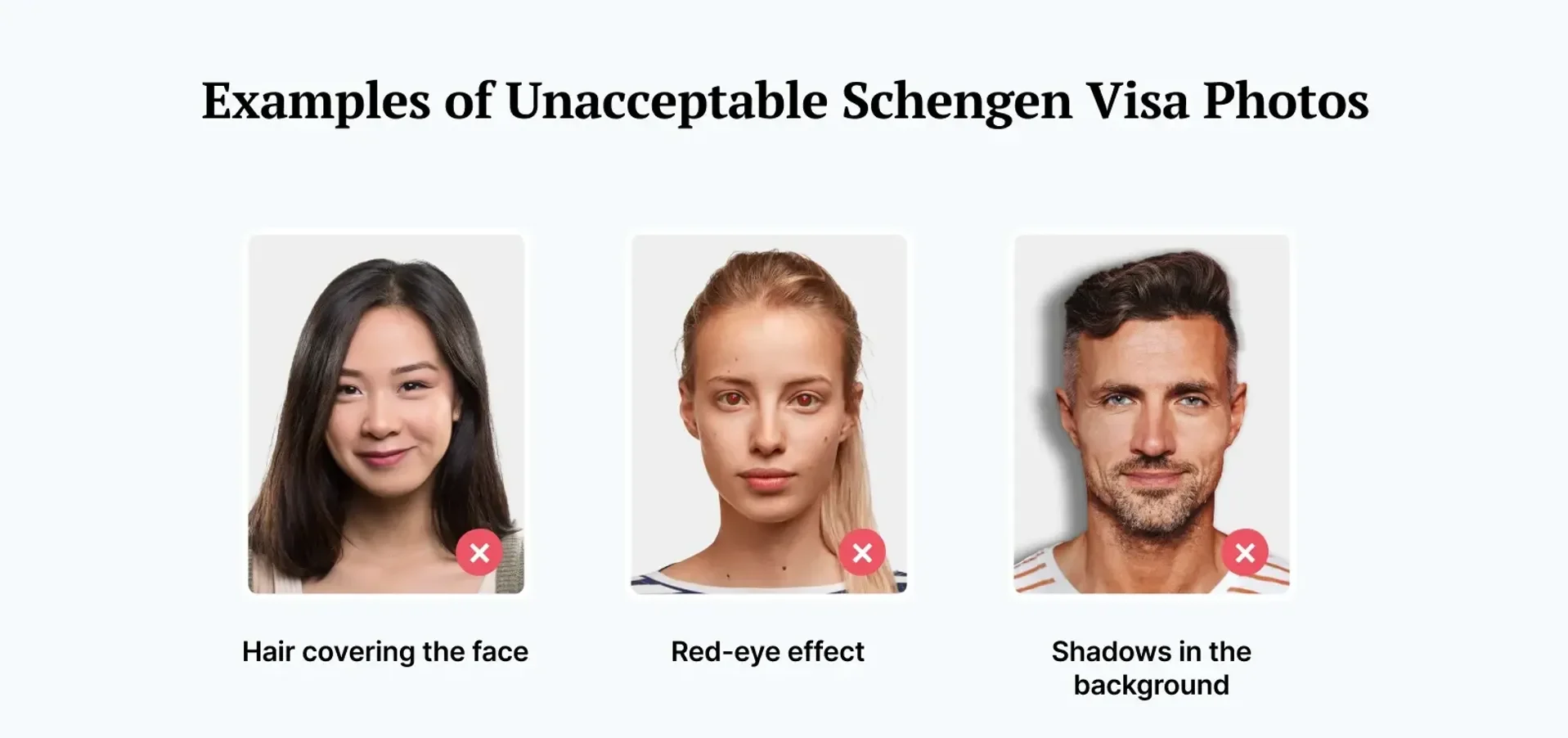
Smiling, raised eyebrows, or angled poses may seem harmless, but they are among the most common reasons photos are rejected. This is one moment where seriousness works in your favour—save the smiles for your travel photos later.
Lighting and Image Quality Requirements
Lighting and clarity play a crucial role in biometric acceptance. To meet Schengen standards:
-
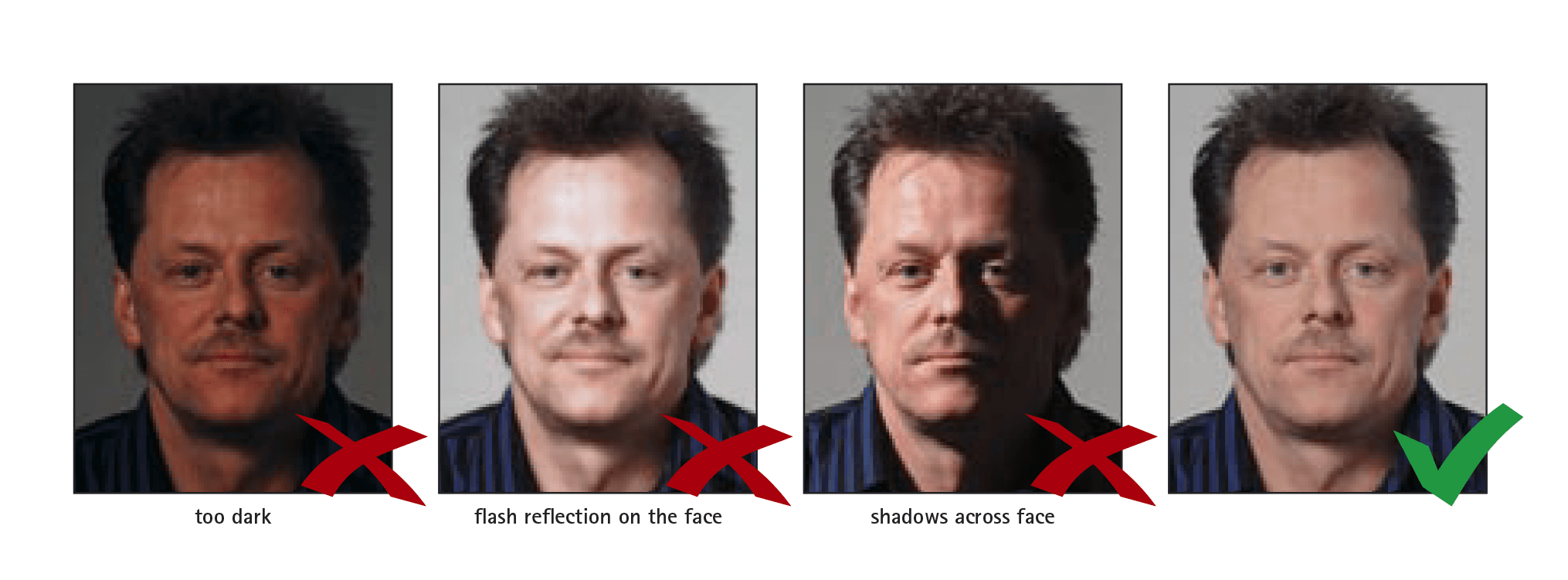
Lighting must be evenly distributed
-
No shadows on the face or background
-
No red-eye effect
-
Image must be sharp and high resolution
Industry data suggests that over 30% of photo rejections are linked to poor lighting or shadows, especially when photos are taken at home or edited digitally. Mobile phone photos, even with high-quality cameras, often fail these checks unless taken professionally.
Clothing and Appearance Guidelines
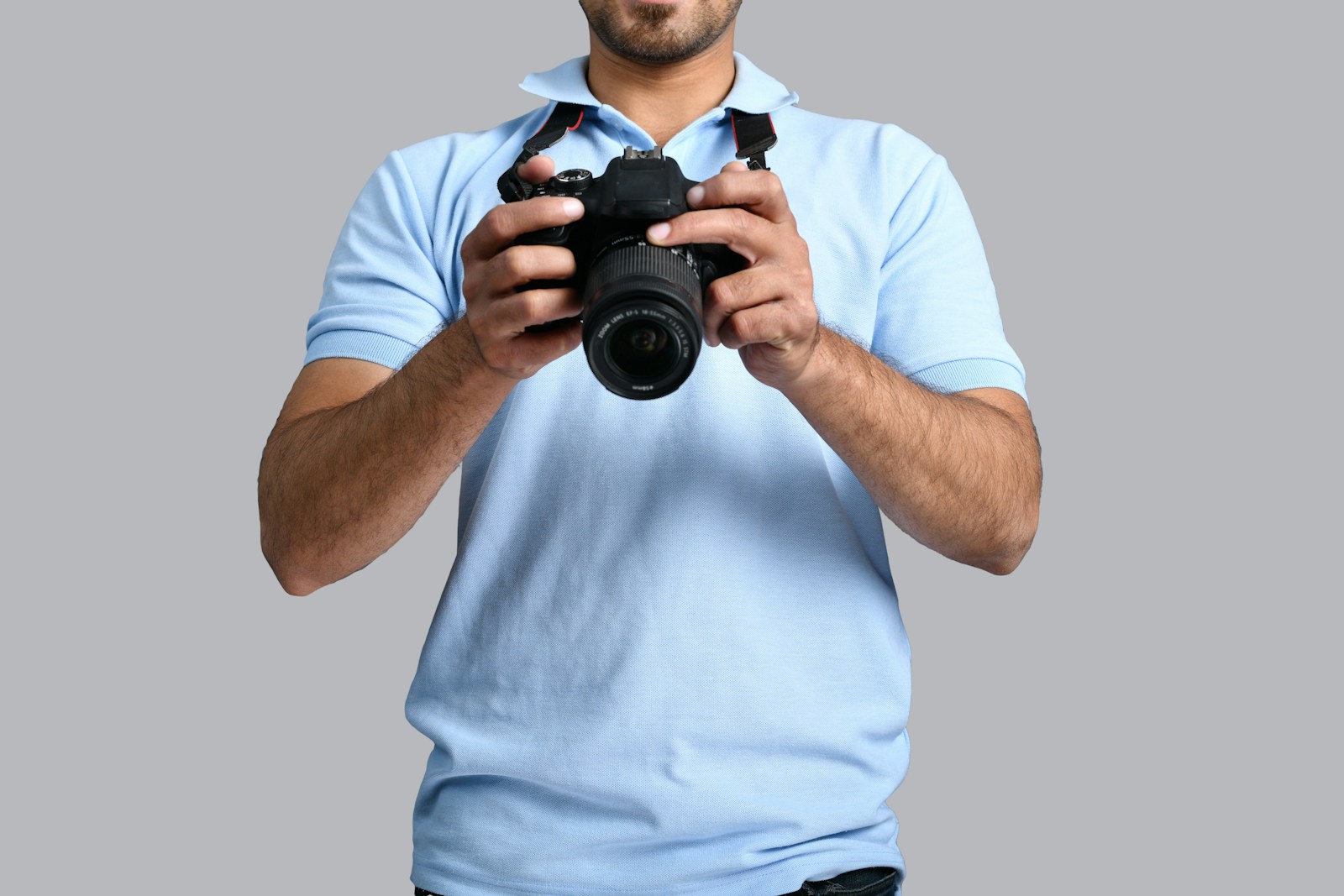
Applicants are advised to wear dark or neutral-coloured clothing to contrast clearly with the light background. White or pastel outfits are discouraged as they blend into the background and reduce facial definition.
Uniforms are not permitted unless worn daily for religious reasons.
Glasses
-
Allowed only if there is no glare or reflection
-
Frames must not cover eyes or eyebrows
-
Sunglasses and tinted lenses are strictly prohibited
Head Coverings
Religious head coverings are permitted, provided:
-
The face is fully visible from chin to forehead
-
No shadows fall on facial features
-
Facial structure remains clearly defined
Photo Requirements for Children and Infants
Children applying for a Schengen visa from the UAE must meet the same standards, with some flexibility for infants.
-
Infants must be photographed alone
-
No hands, toys, or supports visible
-
Eyes should be open where possible
-
Neutral background required
Visa centres acknowledge that infant photos are challenging, but unclear or assisted photos remain a frequent reason for resubmission.
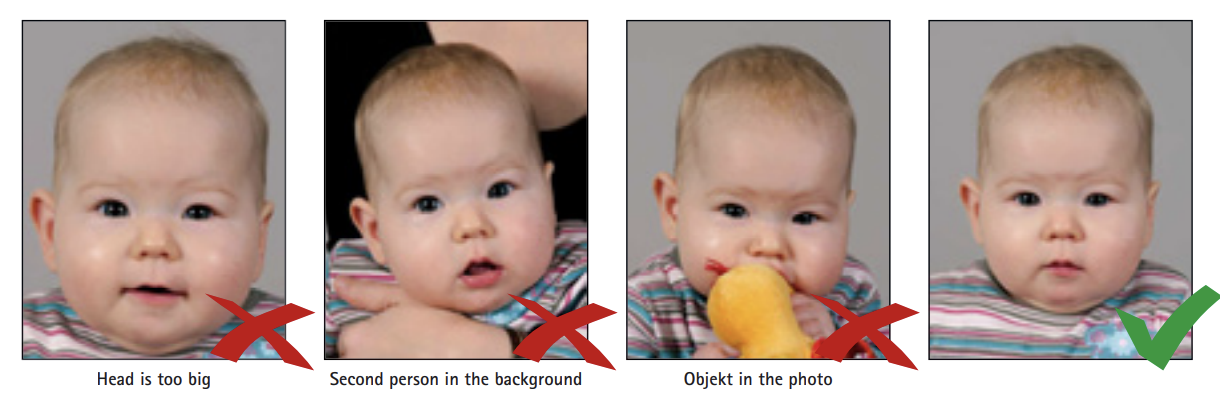
Common Schengen Visa Photo Mistakes Made by UAE Applicants
Some of the most frequent issues include:
-
Incorrect photo dimensions
-
Textured or off-white backgrounds
-
Visible shadows behind the head
-
Smiling or tilted head
-
Low contrast clothing
-
Reusing older visa photos
-
Digitally retouched or filtered images
Data from visa support agencies indicates that photo-related corrections can delay applications by 3–7 working days, depending on appointment availability.
What UAE Applicants Should Know
Physical and Digital Photo Comparison
| Criteria | Physical Photo Submission | Digital Photo Upload |
|---|---|---|
| Photo Size | 35mm x 45mm | Same proportions required |
| Background | Plain white/light grey | Plain white/light grey |
| Format | Printed, matte finish | JPEG (usually) |
| Editing | Not allowed | Not allowed |
| Common Errors | Size mismatch, shadows | Background removal, compression |
Digital uploads may seem easier, but they are often scrutinised more closely for background inconsistencies and digital alterations.
Where UAE Applicants Should Get Visa Photos Taken
Applicants in Dubai, Abu Dhabi, Sharjah, and other emirates are encouraged to visit professional photo studios experienced with Schengen visa requirements. Studios located near VFS Global centres typically understand embassy standards and print photos accordingly.
The cost of a compliant photo is minimal compared to the inconvenience of a delayed or rescheduled appointment.
How Odit Travels Supports a Smooth Schengen Visa Application
Meeting Schengen visa photo requirements may seem minor, but it often determines how smoothly an application progresses. Odit Travels supports smooth schengen visa application for UAE applicants by ensuring this detail—and every related step—is handled correctly before submission.
Key areas of assistance include:
-
Reviewing visa photographs for size, background, lighting, and recency compliance
-
Guiding applicants on embassy-specific photo and documentation requirements
-
Cross-checking application forms and supporting documents for consistency
-
Helping reduce avoidable corrections, resubmissions, and appointment delays
The focus is on accuracy and preparation, allowing applications to move forward confidently and without unnecessary interruptions.
Know More: Schengen Visa Application from the UAE: Who Needs It, How It Works & How to Get Fast...
Final Tips for UAE Applicants
Before submitting your application for schengen visa:
-
Carry extra photo copies
-
Confirm embassy-specific requirements
-
Ensure photos are less than six months old
-
Avoid DIY photo tools or filters
A correct visa photo rarely draws attention—and that is exactly what you want.
Conclusion
While it may appear to be a minor detail, the Schengen visa photo plays a significant role in application success. For UAE applicants, following photo specifications carefully can prevent unnecessary delays and ensure a smoother visa process. A few careful steps today can save days of waiting tomorrow—and allow your travel plans to stay exactly where they belong, on schedule.
For applicants who value accuracy and a well-organised submission, having the right guidance can simplify the process considerably. From checking visa photo compliance to reviewing supporting documents, professional assistance helps minimise avoidable corrections and keeps the application on track.
For structured, detail-focused support with your Schengen visa application, you may reach out to Odit Travels to proceed with clarity and confidence.